Master the basics with the Microsoft Certified: Azure Data Fundamentals certification.

This Azure Data Fundamentals certification offers the foundation you need to build your technical skills and start working with data in the cloud. Mastering the basics can help you jump-start your career and prepare you to dive deeper into other technical opportunities Azure offers.

Discover opportunities in Malaysia’s growing digital economy. With billions of dollars invested by global tech giants like AWS, Microsoft, Google, and Oracle, Malaysia is rapidly emerging as a hub for digital innovation.​ The demand for certified Data and AI professionals has never been higher, making it the perfect time to elevate your career.

Build Malaysia’s AI & Data-Driven Future. Explore the top Data and AI certifications for 2026.

Overview

Unlock the potential of your data with Azure Data Fundamentals credential.

To master data in the cloud, you need the right foundation—a solid understanding of core data concepts, such as relational data, nonrelational data, big data, and analytics. Plus familiarity with the roles, tasks, and responsibilities in the world of data and data analytics.

In this DP-900T00: Microsoft Azure Data Fundamentals course, students will learn:

  • the fundamentals of database concepts in a cloud environment
  • get basic skilling in cloud data services
  • build their foundational knowledge of cloud data services within Microsoft Azure
  • identify and describe core data concepts such as relational, non-relational, big data, and analytics, and explore how this technology is implemented with Microsoft Azure
  • explore the roles, tasks, and responsibilities in the world of data
  • explore relational data offerings, provisioning and deploying relational databases, and querying relational data through cloud data solutions with Microsoft Azure
  • explore non-relational data offerings, provisioning and deploying non-relational databases, and non-relational data stores with Microsoft Azure
  • explore the processing options available for building data analytics solutions in Azure
  • explore Azure Synapse Analytics, Azure Databricks, and Azure HDInsight
  • learn what Power BI is, including its building blocks and how they work together.

Skills Covered

After completing this module, students will be able to:

  •  Describe core data concepts in Azure
  •  Explain concepts of relational data in Azure
  •  Explain concepts of non-relational data in Azure
  •  Identify components of a modern data warehouse in Azure

Prerequisites

Prerequisite certification is not required before taking this course. Successful Azure Data Fundamentals students start with some basic awareness of computing and Internet concepts, and an interest in extracting insights from data.

Specifically:

  •  Experience using a web browser, such as Microsoft Edge.
  •  Familiarity with basic data-related concepts, such as working with tables of data in a spreadsheet and visualizing data using charts.
  •  A willingness to learn through hands-on exploration.

This course serves as a prerequisite for the associate-level tracks below:


Target Audience

The audience for this course is individuals who want to learn the fundamentals of database concepts in a cloud environment, get basic skilling in cloud data services, and build their foundational knowledge of cloud data services within Microsoft Azure.

Course Curriculum

Module 1: Explore Core Data Concepts

  • Data powers the digital transformation that is sweeping across organizations and society in general. But what is “data”, and how is it represented and used?

Learning objectives

  • In this module you will learn how to:
    • Identify common data formats
    • Describe options for storing data in files
    • Describe options for storing data in databases
    • Describe characteristics of transactional data processing solutions
    • Describe characteristics of analytical data processing solutions

Prerequisites

  • None

Module 2: Explore Data Roles and Services

  • Data professionals perform distinct roles in building and managing software solutions, and work with multiple technologies and services to do so.

Learning objectives

  • In this module you will learn how to:
    • Identify common data professional roles
    • Identify common cloud services used by data professionals

Prerequisites

  • None

Module 3: Explore Fundamental Relational Data Concepts

  • Relational database systems are a common way to store and manage transactional and analytical data in organizations of any size around the world.

Learning objectives

  • In this module you will learn how to:
    • Identify characteristics of relational data
    • Define normalization
    • Identify types of SQL statement
    • Identify common relational database objects

Prerequisites

  • None

Module 4: Explore Relational Database Services in Azure

  • Microsoft Azure provides multiple services for relational databases. You can choose the relational database management system that’s best for your needs, and host relational data in the cloud.

Learning objectives

  • In this module, you’ll learn how to:
    • Identify options for Azure SQL services
    • Identify options for open-source databases in Azure
    • Provision a database service on Azure

Prerequisites

  • Before starting this module, you should have a fundamental understanding of relational data concepts and some familiarity with Microsoft Azure and the Azure portal.

Module 5: Explore Azure Storage for Non-Relational Data

  • Azure Storage is a core service in Microsoft Azure that is commonly used to store non-relational data.

Learning objectives

  • In this module, you’ll learn how to:
    • Describe features and capabilities of Azure blob storage
    • Describe features and capabilities of Azure Data Lake Gen2
    • Describe features and capabilities of Azure file storage
    • Describe features and capabilities of Azure table storage
    • Provision and use an Azure Storage account

Prerequisites

  • Before starting this module, you should have some familiarity with Microsoft Azure concepts and the Azure portal.

Module 6: Explore Fundamentals of Azure Cosmos DB

  • Azure Cosmos DB provides a highly scalable store for non-relational data.

Learning objectives

  • In this module, you’ll learn how to:
    • Describe key features and capabilities of Azure Cosmos DB
    • Identify the APIs supported in Azure Cosmos DB
    • Provision and use an Azure Cosmos DB instance

Prerequisites

  • Before starting this module you should have some familiarity with Microsoft Azure concepts and the Azure portal.

Module 7: Explore Fundamentals of Large-Scale Data Warehousing

  • Organizations use modern data warehousing to build large scale data analytics solutions that generate insights and drive success. Microsoft Azure includes multiple technologies that you can combine to build a modern data warehousing solution.

Learning objectives

  • In this module, you will learn how to:
    • Identify common elements of a modern data warehousing solution
    • Describe key features for data ingestion pipelines
    • Identify common types of analytical data store and related Azure services
    • Provision Azure Synapse Analytics and use it to ingest, process, and query data

Prerequisites

  • Before starting this module, you should have a conceptual understanding of data and databases, and be familiar with Microsoft Azure services for data workloads such as Azure Storage, Azure SQL Database, and Azure Cosmos DB.

Module 8: Explore Fundamentals of Real-Time Analytics

  • Learn about the basics of stream processing, and the services in Microsoft Azure that you can use to implement real-time analytics solutions.

Learning objectives

  • In this module, you’ll learn how to:
    • Compare batch and stream processing
    • Describe common elements of streaming data solutions
    • Describe features and capabilities of Azure Stream Analytics
    • Describe features and capabilities of Spark Structured Streaming on Azure
    • Describe features and capabilities of Azure Synapse Data Explorer

Prerequisites

  • Before starting this module, you should have some conceptual understanding of modern data warehousing and analytics, and you should be familiar with Azure services for data workloads, including Azure Storage, Azure SQL Database, and Azure Synapse Analytics.

Module 9: Explore Fundamentals of Data Visualization

  • Learn the fundamental principles of analytical data modeling and data visualization, using Microsoft Power BI as a platform to explore these principles in action.

Learning objectives

  • After completing this module, you will be able to:
    • Describe a high-level process for creating reporting solutions with Microsoft Power BI
    • Describe core principles of analytical data modeling
    • Identify common types of data visualization and their uses
    • Create an interactive report with Power BI Desktop

Prerequisites

  • None

Dates & Locations

Let’s make it work for you

Can’t find a date that fits? Need to train your whole team? Looking for a discount?
Speak to one of our learning experts today.

September 11, 2026 - September 11, 2026

Location: Kuala Lumpur
Modal: ILT
Availability: TBC
Exam:
RM 225

September 11, 2026 - September 11, 2026

Location: Online
Modal: VILT
Availability: TBC
Exam:
RM 225

December 18, 2026 - December 18, 2026

Location: Kuala Lumpur
Modal: ILT
Availability: TBC
Exam:
RM 225

December 18, 2026 - December 18, 2026

Location: Online
Modal: VILT
Availability: TBC
Exam:
RM 225
Trainocate exam and cert

Exam & Certification

Microsoft Certified: Azure Data Fundamentals.

The Azure Data Fundamentals certification validates your foundational knowledge of core data concepts and how they’re implemented using Azure data services. You earn it by passing Exam DP-900: Microsoft Azure Data Fundamentals.

Training & Certification Guide

Candidates for the Azure Data Fundamentals certification should have foundational knowledge of core data concepts and how they are implemented using Microsoft Azure data services.

This certification is intended for candidates beginning to work with data in the cloud.

Candidates should be familiar with the concepts of relational and non-relational data, and different types of data workloads such as transactional or analytical.

Azure Data Fundamentals can be used to prepare for other Azure role-based certifications like Azure Datab

Prove that you can describe the following: core data concepts; how to work with relational data on Azure; how to work with non-relational data on Azure; and an analytics workload on Azure.

Skills measured:

  • Describe core data concepts (15-20%)
  • Describe how to work with relational data on Azure (25-30%)
  • Describe how to work with non-relational data on Azure (25-30%)
  • Describe an analytics workload on Azure (25-30%)

When you earn an Azure certification or learn a new skill, it’s an accomplishment worth celebrating with your network. It often takes less than a minute to update your LinkedIn profile and share your achievements, highlight your skills, and help boost your career potential. Here’s how:

  • If you’ve earned a certification already, follow the instructions in the congratulations email you received. Or find your badge on your Certification Dashboard, and follow the instructions there to share it. (You’ll be transferred to the Acclaim website.)
  • To add specific skills, visit your LinkedIn profile and update the Skills and endorsements section. Tip: We recommend that you choose skills listed in the skills outline guide for your certification.

Your Microsoft Certification can help validate that you have the skills to stay ahead with today’s technology. It can also help empower you with a boost in confidence and job satisfaction—and maybe even a salary increase.

Use your Azure Data Fundamentals certification as a starting point to explore more training on Azure, SQL Server and other technologies and to chart your path forward. If you’re looking to advance your career or to jump-start a new one, the message is the same: establish your foundations. Earn your certification, and open up new possibilities for your career and for turning your ideas into solutions on Azure.

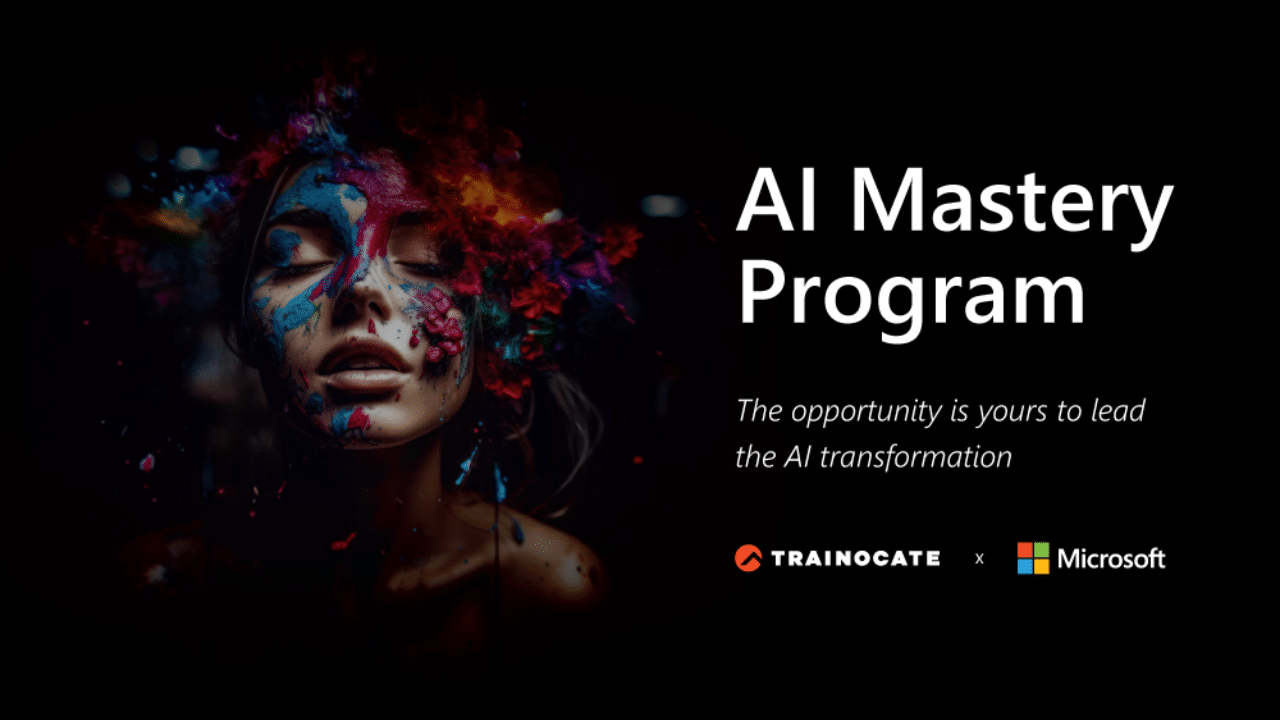
AI Mastery Program: Learn AI with Microsoft in 2024

Artificial Intelligence (AI) has been one of the hottest topics in the tech industry for the past decade. With its rapid advancements and potential to impact our daily lives, learning AI has become a highly sought-after skill.

We are thrilled to announce the launch of our Microsoft AI Mastery Program in 2024, made possible through our partnership with Microsoft, a renowned leader in AI technology. This program is tailored for individuals and tech professionals passionate about acquiring and mastering the fundamental and advanced principles of AI.

Azure Strategy & Implementation Guide

Get a step-by-step introduction to using Azure for your cloud infrastructure with this Pack e-book. Read the latest edition of the Azure Strategy and Implementation Guide for detailed guidance on how to create a successful cloud adoption strategy with new innovations, capabilities, and security features from Microsoft Azure.

Microsoft Azure SQL Jumpstart Guide

Find out how to get started launching your first Azure SQL database or find ways to make your existing SQL database work harder. Download the Azure SQL Jumpstart Guide for detailed instructions and in-depth insights to help you make your Azure SQL deployment, migration, or enhancement run smoothly.

Low-code Application Development – Microsoft PowerApps and Azure

Build production-ready apps faster with a low-code environment. Quickly stand up your applications with Power Apps and get more time to apply your technical expertise to extending and optimizing those apps in Azure.

Azure Cloud Native Architecture Mapbook

Grow your cloud architecture skills with guidance from Azure Experts. Go beyond developing cloud-native applications to planning and implementing cloud application infrastructure. In this free e-book from Packt Publishing, you’ll find best practices for infrastructure design and patterns for building a complete solution.

Windows Virtual Desktop Security

Find out how to secure your Windows Virtual Desktop environment when migrating your virtual desktop infrastructure (VDI) to Azure. Read this security handbook to get technical hands-on guidance on how to help protect your apps and data in your Windows Virtual Desktop deployment.

An Easier Path to the Cloud

Discover how to get more value from your on premises Windows Server and SQL Server investments and move some or all of your workloads to the cloud using your existing skills. See how to start using the cloud to support new ways of doing business and help ensure business continuity even if you need to keep some of your IT assets on-premises due to regulatory or data governance requirements.

Hands-on Kubernetes on Azure

Discover how to build highly scalable applications using containers and how to deploy and manage those containers at scale with Kubernetes on Azure. Read the completely reviewed and updated Packet e-book, Hands-On Kubernetes on Azure, Third Edition and discover what’s new, including security enhancements, continuous integration and continuous delivery (CI/CD) automation, and the latest supported technologies. Gain insight into building reliable applications in the new foreword by Kubernetes co-founder Brendan Burns.

Azure Synapse Analytics Proof of Concept Playbook

Learn how to perform a proof of concept efficiently and economically with Azure Synapse Analytics. Read the Azure Synapse Analytics Proof of Concept Playbook to understand the key concepts involved in deploying data warehousing, data lake, and big data workloads with Azure Synapse and get the evidence you need to make the case for implementation at your organization.

Azure Serverless Cookbook

Spend less time managing server infrastructure and more time building great apps. Get your solutions to market faster using Azure Functions, a fully managed compute platform for processing data, integrating systems, and building simple APIs and microservices. The Azure Serverless Computing Cookbook will, through the development of basic back-end wep API that performs simple operations, helps you understand how to persist data in Azure Storage services.

Frequently Asked Questions

Earning a Microsoft Certification is globally recognized and industry-endorsed evidence of mastering real world skills. It shows you demonstrate proficiency in keeping pace with technology. It’s a career move that yields many positive results.

Getting a Microsoft Certification is also a great way to break into the tech industry. A Microsoft Certification immediately confers a level of authority and expertise, especially helpful for someone new to the industry.

The number of questions on a certification exam is subject to change as Microsoft make updates to ensure it aligns with current changes in the technology and job role. Most Microsoft Certification exams typically contain between 40-60 questions; and around 60-140 minutes.

Starting June 30 2021, all newly earned role-based and specialty certifications will be valid for one year from the date the certification was earned.

To stay up to date, IT pros are constantly learning and adding skills. The IDC study concluded that Microsoft Learning Partners such as Trainocate Malaysia which was awarded 2021 Microsoft Learning Partner of the Year are well positioned to help organizations achieve their business and learning goals. The IT leaders who were surveyed found the most value from a Learning Partner that provides:

  • An end-to-end solution which starts with identifying skill gaps, simplifies the learning experience, and finishes by evaluating how well the Learning Partner met the organization goals.
  • Scale, flexibility, and speed to train teams of any size, in any location, amid changing circumstances.
  • Value-added services, such as hands-on labs, classroom training, and custom content that help the skills development program succeed.
  • High-quality content and delivery, meaning accurate, relevant courseware, top-notch instructors, and a path to certification, if needed.

DP-080T00: Querying Data with Microsoft Transact-SQL Get started with Transact SQL

Learn the basics of Microsoft’s standard SQL language and master skills required as a data analyst, a data engineer, a data scientist, a database administrator or a database developer to query and modify data in relational databases that are hosted in Microsoft SQL Server-based database systems.


DP-420T00: Designing and Implementing Cloud-Native Applications Using Microsoft Azure Cosmos DB

Unlock opportunities with Azure Cosmos DB.

This course teaches developers how to create application using the SQL API and SDK for Azure Cosmos DB. Students will learn how to write efficient queries, create indexing policies, manage and provisioned resources, and perform common operations with the SDK.

PL-300T00: Microsoft Power BI Data Analyst Certification

This PL-300T00: Microsoft Power BI Data Analyst course will discuss the various methods and best practices that are in line with business and technical requirements for modeling, visualizing, and analyzing data with Power BI. The course will also show how to access and process data from a range of data sources including both relational and non-relational data. This Power BI course will also explore how to implement proper security standards and policies across the Power BI spectrum including datasets and groups.

Speak to a Training Consultant

All courses are HRD Claimable.
Get in touch with our team via the form or WhatsApp us on +6011-5119 6631

Preferred mode of training
Checkboxes