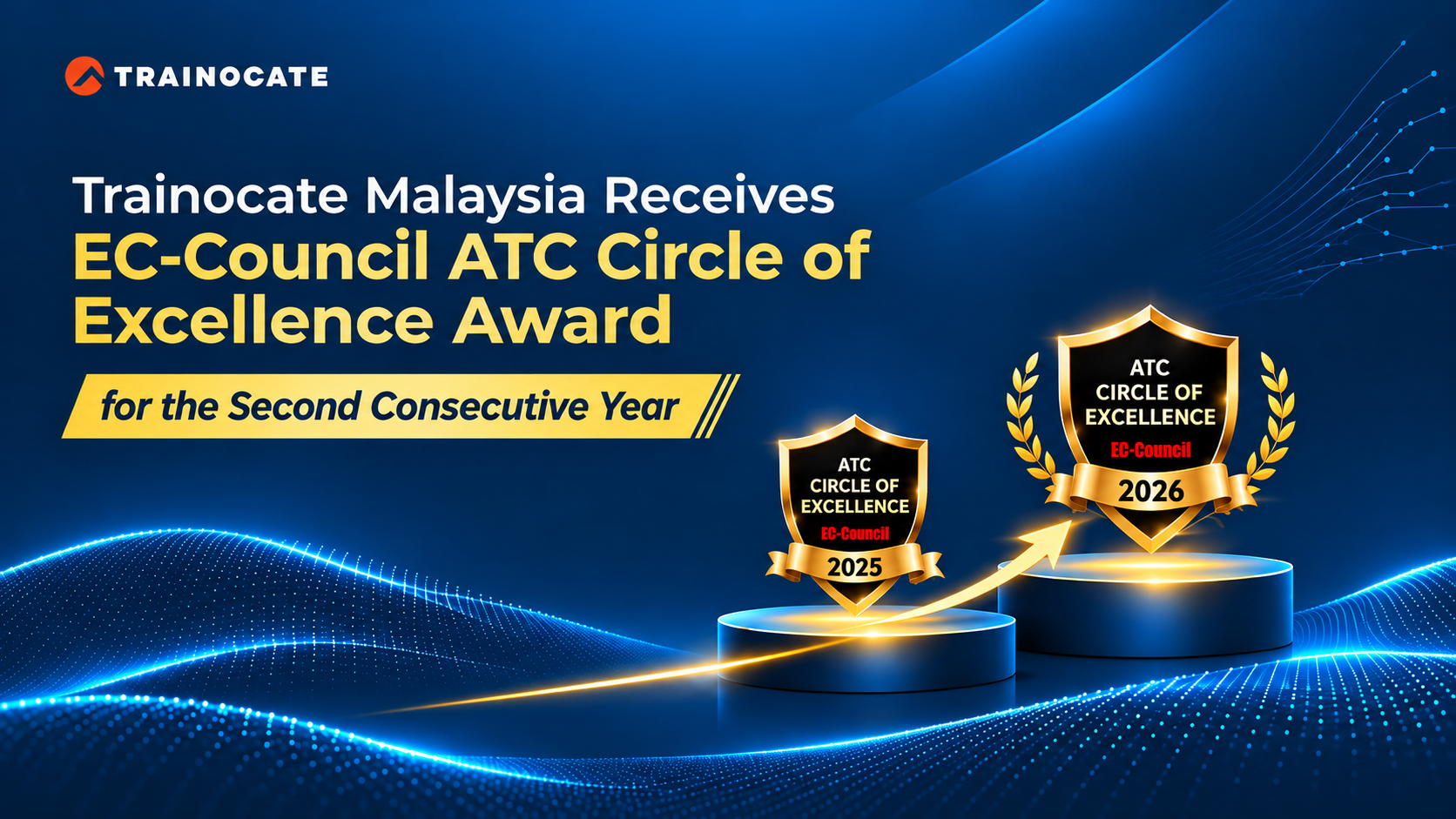
Trainocate Malaysia has been named a recipient of the 2026 EC-Council ATC Circle of Excellence Award (APAC), marking its second consecutive year of receiving this recognition following its achievement in 2025.
Awarded on November 4, 2026, the recognition acknowledges Trainocate Malaysia’s contribution to EC-Council’s mission of developing a skilled cybersecurity workforce through professional training and certification.
The achievement reflects the continued partnership between Trainocate Malaysia and EC-Council in supporting cybersecurity education and developing the technical capabilities of individuals and organizations across Malaysia.
Recognizing Excellence in Cybersecurity Education
Established in 2007, the EC-Council Global Partner Awards recognize the contributions of training partners, academic institutions, instructors, and other members of its global education network.
The EC-Council Global Partner Awards 2026, announced on November 16, recognize achievements across 19 award categories. EC-Council’s global network now comprises more than 3,000 partners across over 150 countries.
The ATC Circle of Excellence Award falls under the Accredited Training Center (ATC) category, recognizing training partners for their contributions to cybersecurity education and professional development.
Trainocate Malaysia is among seven recipients in the Asia Pacific region listed under this category in the official 2026 winners list.
Two Consecutive Years of Recognition
Having received the EC-Council ATC Circle of Excellence Award in 2025, Trainocate Malaysia’s recognition in 2026 represents another milestone in its partnership with EC-Council.
Receiving the award for a second consecutive year underscores the importance of maintaining consistency in training delivery, supporting learners throughout their professional development, and ensuring that training remains relevant to industry requirements.
It is also an opportunity to acknowledge the collective efforts of our trainer, internal teams, customers, and learners who continue to contribute to the development of Malaysia’s cybersecurity talent.
“Receiving this recognition for the second consecutive year is a proud moment for Trainocate Malaysia. Our partnership with EC-Council reflects a shared commitment to developing skilled cybersecurity professionals and supporting Malaysia’s digital transformation. We are grateful to our teams, instructors, customers, and EC-Council for their continued trust and support.”
 Ruby Kaur, Managing Director, Trainocate Malaysia
Building Cybersecurity Skills for Today’s Digital Environment
As organizations expand their digital operations, protecting systems, networks, and sensitive information has become an important business priority.
The growing use of cloud computing, artificial intelligence (AI), and interconnected digital systems also brings new security challenges. Cybersecurity professionals need the knowledge and technical skills to address these challenges in areas such as:
For employers, investing in cybersecurity training helps build internal expertise, address skills gaps, and prepare teams to manage security risks.
Professional certifications offer a structured way to develop these skills, whether for individuals starting a career in cybersecurity or experienced professionals seeking to strengthen their expertise in specific areas.
“Cybersecurity training must remain relevant to the challenges professionals encounter in their roles. Through our partnership with EC-Council, we aim to provide learning opportunities that combine technical knowledge with practical application, helping individuals and organizations strengthen their cybersecurity capabilities.”
 Andy Ho, Business Development, Trainocate Malaysia
Developing Cybersecurity Talent Through EC-Council
As an EC-Council Authorized training partner, Trainocate Malaysia offers professional training and certification programs covering various cybersecurity disciplines, from foundational knowledge to specialized technical skills.
These include:
Recognizing that cybersecurity career paths vary according to professional experience and organizational requirements, Trainocate Malaysia also offers a comprehensive Top Cybersecurity Certifications 2027 guide, covering certification pathways from foundational cybersecurity to specialized technical and leadership roles.
Turning Cybersecurity Challenges into Career Opportunities
Cybersecurity is no longer a concern limited to IT departments. From accessing online banking services to receiving medical treatment, individuals and businesses rely on digital systems that must remain secure and operational.
In November 2026, the National Cyber Security Agency (NACSA) reported that Malaysia recorded:
CYBERSECURITY IN MALAYSIA
5,110
Cybersecurity incidents
January – September 2026
9
Security alerts and advisories
October – 9 November 2026
A recent example is Malaysia’s Ministry of Health (MOH), which reportedly detected a cybersecurity incident involving unauthorized access to a file-sharing platform on 12 November 2026. While patient services remained unaffected, the incident required investigation, containment, and additional security measures.
Such incidents highlight the importance of having professionals equipped with the right technical skills to detect threats, investigate security incidents, and strengthen organizational defenses, capabilities addressed by EC-Council certifications such as:
CSA
Threat Detection
Identifying suspicious activities and potential security threats.
CHFI
Incident Investigation
Examining digital evidence and investigating security breaches.
CND
Network Defense
Protecting networks and strengthening security controls.
Why Investing in the Right Certification Matters
Choosing a cybersecurity certification is not simply about adding another credential to a resume. It is about developing the knowledge and practical skills needed to take on real-world cybersecurity responsibilities.
With EC-Council offering certifications across different areas of cybersecurity, professionals can choose learning pathways that complement their existing experience, address their skills gaps, and support their career aspirations.
By choosing certifications with a clear purpose, professionals can make better use of their time, effort, and financial resources. The value of certification extends beyond earning a credential, it lies in developing capabilities that can be applied in the workplace and support future career opportunities.
Continuing Our Commitment to Cybersecurity Excellence
The 2026 EC-Council ATC Circle of Excellence Award reinforces Trainocate Malaysia’s commitment to delivering relevant, quality cybersecurity education.
As we move into 2027, we look forward to strengthening our partnership with EC-Council, supporting more professionals in their certification journeys, and helping organizations develop the cybersecurity capabilities needed to protect their digital environments.
You Might Also Like