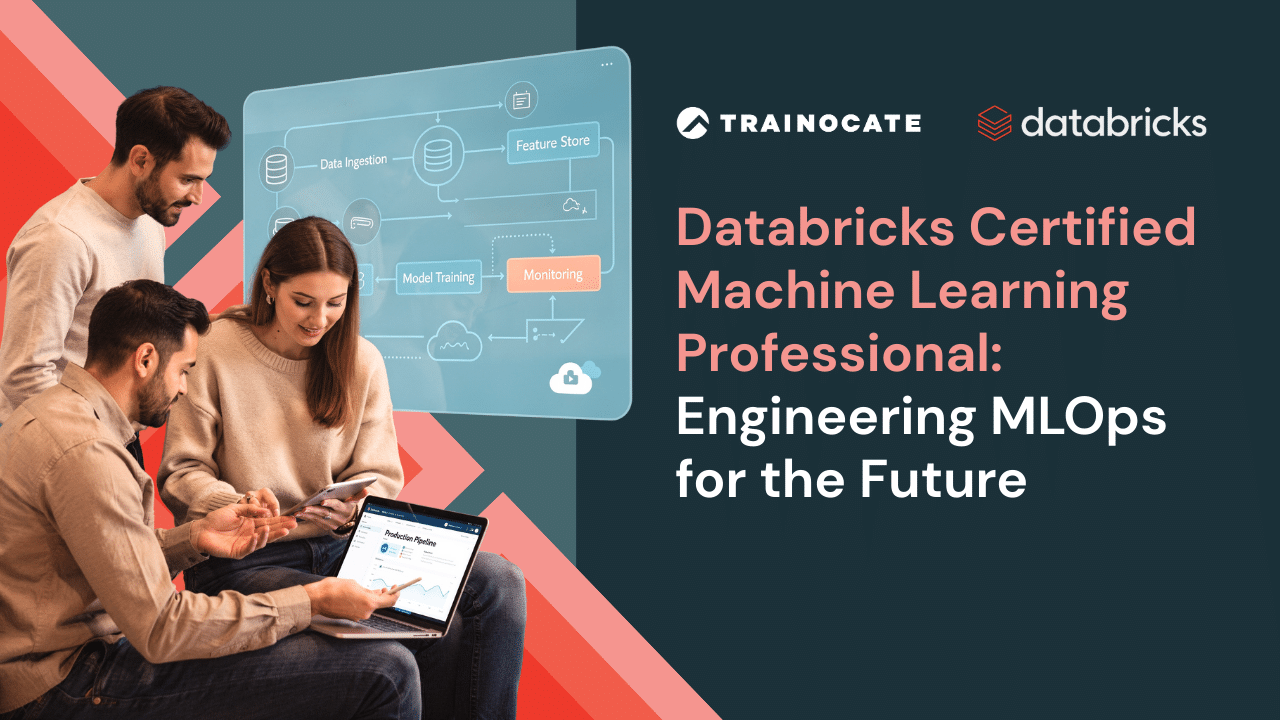
In 2026, training a machine learning model is the easy part. The real challenge is keeping it alive in production.
For years, the industry cited a grim statistic: nearly 90% of ML models never made it out of the lab. Today, that failure rate is unacceptable. As Malaysian enterprises like CIMB, CelcomDigi, and Petronas integrate “Agentic AI” into their core operations, they cannot afford models that hallucinate or drift silently into obsolescence.
They need MLOps.
The Databricks Certified Machine Learning Professional is the gold standard for this discipline. It moves beyond the code-centric focus of the Associate level to validate your ability to architect robust, automated, and monitored AI systems.
For Senior Data Scientists and MLOps Engineers in ASEAN, this certification is the definitive proof that you can stop “playing” with AI and start engineering it.
Why Do Models Fail in Production?
A model that performs perfectly on historical data often fails in the real world. This phenomenon is usually driven by two forces: Data Drift (the input data changes) and Concept Drift (the relationship between variables changes).
In a legacy environment, detecting these shifts takes weeks. By then, the business has lost money.
The Professional certification validates your ability to solve this using Lakehouse Monitoring. It tests your skill in setting up automated “watchdogs” that alert you the moment a model’s performance degrades.
This shifts the workflow from “reactive firefighting” to “proactive maintenance.”
How Does the Professional Certification Differ from the Associate?
It is crucial to understand the leap in difficulty. The Associate exam asks, “How do I train a model?” The Professional exam asks, “How do I ensure this model survives in a hostile production environment?”
| Feature | ML Associate (Builder) | ML Professional (Architect) |
|---|---|---|
| Primary Focus | Feature Engineering, Training, Basic MLflow | Deployment, Monitoring, Automation, Governance |
| Key Question | “Can you optimize hyperparameters?” | “Can you detect drift and trigger a retrain?” |
| Complexity | Code completion, API syntax | Architectural scenarios, tradeoff analysis |
| Prerequisites | 6 months experience | 1+ years MLOps experience |
| Pass Rate | Moderate | Low (Requires deep production experience) |
What Are the Critical Domains in the 2026 Syllabus?
The exam is scenario-based. You will face complex questions requiring you to choose the best deployment strategy or debugging tool for a specific failure mode.
1. MLflow Production Lifecycle (30%)
This domain covers the governance of the model registry. You must master Webhooks and automation.
- Scenario: A model enters the “Staging” stage. How do you automatically trigger a CI/CD pipeline to run integration tests before promoting it to “Production”?
- Key Skill: Implementing checks that prevent a junior data scientist from accidentally overwriting a critical fraud detection model.
2. Model Deployment at Scale (25%)
Serving a model to five users is simple. Serving it to five million users requires engineering.
- Real-Time Serving: Configuring Mosaic AI Model Serving endpoints. You need to understand “Provisioned Concurrency” to handle traffic spikes without latency.
- A/B Testing: The exam heavily tests your ability to route traffic. Can you set up an endpoint where 90% of traffic goes to the “Champion” model and 10% to the “Challenger” model to validate performance safely?
3. Solution Monitoring and Observability (15%)
This is the frontier of AI Engineering in 2026.
- Drift Detection: You must know how to configure Lakehouse Monitoring to track statistical properties of your data over time.
- Inference Tables: The exam tests your ability to log every request and response payload. This creates an audit trail that is essential for compliance with Malaysian financial regulations (RMiT).
4. Experimentation and Security (30%)
- Feature Store: Securely sharing feature tables across workspaces using Unity Catalog.
- Permissions: Managing who can read training data versus who can query the inference endpoint.
What Is the Career Outlook for MLOps Professionals in Malaysia?
The role of the “AI Reliability Engineer” or “MLOps Lead” is one of the highest-paid technical positions in the region.
As of late 2025, salary benchmarks indicate a significant premium for this skillset:
- Senior Data Scientist (Generalist): RM 12,000 – RM 16,000 per month.
- MLOps Lead / AI Architect: RM 18,000 – RM 25,000+ per month.
The reason for this premium is risk mitigation. A Senior Data Scientist can build a model that generates revenue. An MLOps Professional prevents that model from causing a reputation-destroying error. For banks and telcos, that insurance is worth the cost.
How Should You Prepare for the Exam?
You cannot learn MLOps effectively from a textbook. You must experience failure.
The Trainocate Simulation:
Our advanced MLOps training does not just show you the “happy path.” We simulate production crashes.

We introduce bad data into a stream and force you to configure the alerts that catch it.

We give you a slow endpoint and ask you to optimize the container serialization.

You will write the webhook that triggers a retraining job automatically when performance drops below a threshold.
This hands-on “anti-pattern” training is the only way to develop the intuition required to pass the exam and succeed in the role.
Conclusion: The Architect of the AI Era
In the “Agentic Future” predicted by Gartner and IDC, AI systems will act autonomously. They will make decisions without human intervention.
In that world, the Databricks Certified Machine Learning Professional is the architect who ensures those decisions are safe, reliable, and valuable. This certification is your license to build the critical infrastructure of the 2026 digital economy.