
Apply AI to strengthen cyber defense, accelerate threat analysis, and improve security operations.
This course equips cybersecurity professionals with practical AI skills to improve threat investigation, streamline incident response, enhance vulnerability management, and support faster, more informed security decisions using today’s leading AI tools.
- Why get trained: Learn how to use AI for threat intelligence analysis, log investigation, incident response documentation, vulnerability prioritization, security reporting, prompt engineering, security workflow automation, and responsible AI adoption within cybersecurity operations.
- Why it matters: Professionals who understand how to apply AI responsibly can improve detection speed, strengthen investigations, reduce manual effort, enhance communication, and support more effective security operations while maintaining appropriate human oversight.
- Who should attend: Cybersecurity Analysts, SOC Analysts, IT Security Professionals, Information Security Officers, GRC and Risk Professionals, IT Auditors, System Administrators, Infrastructure Engineers, Security Managers, Technical Leads, and professionals transitioning into cybersecurity roles. No prior AI or programming experience is required.
Build practical AI cybersecurity skills that help improve threat detection, strengthen incident response, and support responsible security operations. HRD Corp Claimable.

Overview
Cyber threats are increasing in scale, sophistication, and speed. Traditional security approaches—based solely on static rules and manual analysis—are no longer sufficient to detect and respond to modern cyberattacks. Artificial Intelligence (AI) is now a critical capability in strengthening cybersecurity posture, enabling faster threat detection, improved incident response, and enhanced security decision-making.
Advances in Machine Learning, Large Language Models (LLMs), and Generative AI are transforming cybersecurity across areas such as threat intelligence analysis, log investigation, vulnerability assessment, security reporting, and awareness training. At the same time, AI introduces new risks, including adversarial AI, hallucinated outputs, and over-reliance on automated decisions.
This course provides a practical, security-focused introduction to AI for Cybersecurity. Participants will learn AI fundamentals, explore how AI tools support cybersecurity workflows, and gain hands-on experience using GenAI tools to assist with threat analysis, incident response documentation, risk reporting, and security operations—without requiring programming skills.

Skills Covered
By the end of this course, participants will be able to:
- Understand core AI concepts relevant to cybersecurity
- Distinguish between AI, Machine Learning, LLMs, and Generative AI in security contexts
- Identify how AI is used for threat detection, analysis, and response
- Apply AI tools to security monitoring, investigation, and reporting tasks
- Improve speed and consistency of security analysis and documentation
- Recognise risks, limitations, and ethical considerations of AI in cybersecurity
- Use AI responsibly within security, legal, and organisational constraints
Prerequisites
There are no prerequisites required to attend this course.
Target Audience
This course is designed for professionals involved in cybersecurity and IT risk management, including:
- Cybersecurity analysts and SOC staff
- IT security and network security professionals
- Information security officers and managers
- IT auditors, GRC, and risk professionals
- System and infrastructure administrators
- IT managers and technical leads
- Professionals transitioning into cybersecurity roles
No prior AI or advanced programming background is required.
Module 1: Understanding AI for Cybersecurity
- What Artificial Intelligence is and is not
- Relationship between:
- Artificial Intelligence
- Machine Learning
- Deep Learning
- Large Language Models (LLMs)
- Generative AI
- How AI supports cybersecurity:
- anomaly and threat detection
- log analysis and correlation
- malware and phishing analysis
- security reporting and decision support
- Strengths and limitations of AI in cybersecurity
Module 2: AI Tools Landscape for Cybersecurity Professionals
- Overview of AI tools used in cybersecurity support:
- ChatGPT, Gemini, Copilot, Claude
- Perplexity, Grok, Manus, DeepSeek, Qwen, NotebookLM
- Using GenAI alongside security tools (conceptual):
- SIEM, SOAR, IDS/IPS, EDR
- Selecting the right AI tool for:
- threat intelligence analysis
- incident investigation support
- security documentation and reporting
- Prompt engineering fundamentals for cybersecurity scenarios
Hands-On Activities
- Writing prompts for analysing security alerts
- Generating incident summaries and threat explanations
- Comparing AI outputs across tools
Module 3: AI for Threat Analysis and Incident Response Support
- Using AI to:
- analyse logs and alerts (conceptual examples)
- summarise incident timelines
- support root cause analysis
- AI-assisted threat intelligence interpretation
- Communicating technical incidents to non-technical stakeholders
Hands-On Activities
- Drafting incident response reports using AI
- Creating executive-level security summaries
Module 4: Responsible AI, Risks, and Ethics in Cybersecurity
- Risks of AI in cybersecurity:
- hallucinated threat explanations
- false positives and false negatives
- automation bias and over-reliance
- Adversarial AI and AI-powered attacks
- Data sensitivity and confidentiality
- Human-in-the-loop security decision-making
- Best practices for responsible AI use in security operations
Module 5: AI for Vulnerability Management and Risk Assessment
- AI-assisted vulnerability analysis and prioritisation
- Supporting CVE interpretation and remediation planning
- Risk scoring and impact assessment support
- Improving vulnerability communication
Hands-On Activities
- Analysing vulnerability reports with AI assistance
- Drafting risk assessment summaries
Module 6: AI for Security Awareness, Policy, and Documentation
- Using AI to:
- draft security policies and procedures
- create security awareness materials
- summarise standards (ISO 27001, NIST, etc.)
- NotebookLM for security documentation management
- Ensuring accuracy and compliance
Hands-On Activities
- Creating security awareness content using AI
- Simplifying technical security policies
Module 7: AI-Enabled Cybersecurity Workflow
- Designing AI-supported cybersecurity workflows:
- alert → analysis → response → reporting
- Integrating AI into SOC and security operations
- Improving speed, consistency, and documentation quality
- Measuring security effectiveness with AI support
Exercise
- Designing an AI-assisted cybersecurity workflow
Module 8: AI Strategy for Cybersecurity Teams and Leaders
- Identifying high-impact AI use cases in cybersecurity
- Balancing automation with human expertise
- Establishing AI usage policies for security teams
- Preparing cybersecurity teams for AI-driven threats
- Future trends: AI vs AI in cyber warfare
Workshop
- Drafting a high-level AI adoption strategy for cybersecurity functions

Exam & Certification
Note: There is no exam directly associated with this course. However, Trainocate offers an extensive portfolio of industry-recognized certifications that can help you stand out as a tech professional in 2026 and beyond. Achieving these credentials are one of the most effective ways to validate your skills and accelerate your career.
With our expert-led training, you’ll be prepared to:
- Master in-demand capabilities across Cloud, Data & AI, and Cybersecurity — areas driving global digital transformation.
- Prove your expertise with a globally respected credential recognized by employers worldwide.
- Advance your career by enhancing your credibility, increasing your earning potential, and opening doors to new opportunities.
Explore our full range of certs and start building the skills that matter today:
- Top Cybersecurity Skills for 2026
- Top Data and AI certifications for 2026
- Top Cloud Certifications for 2026
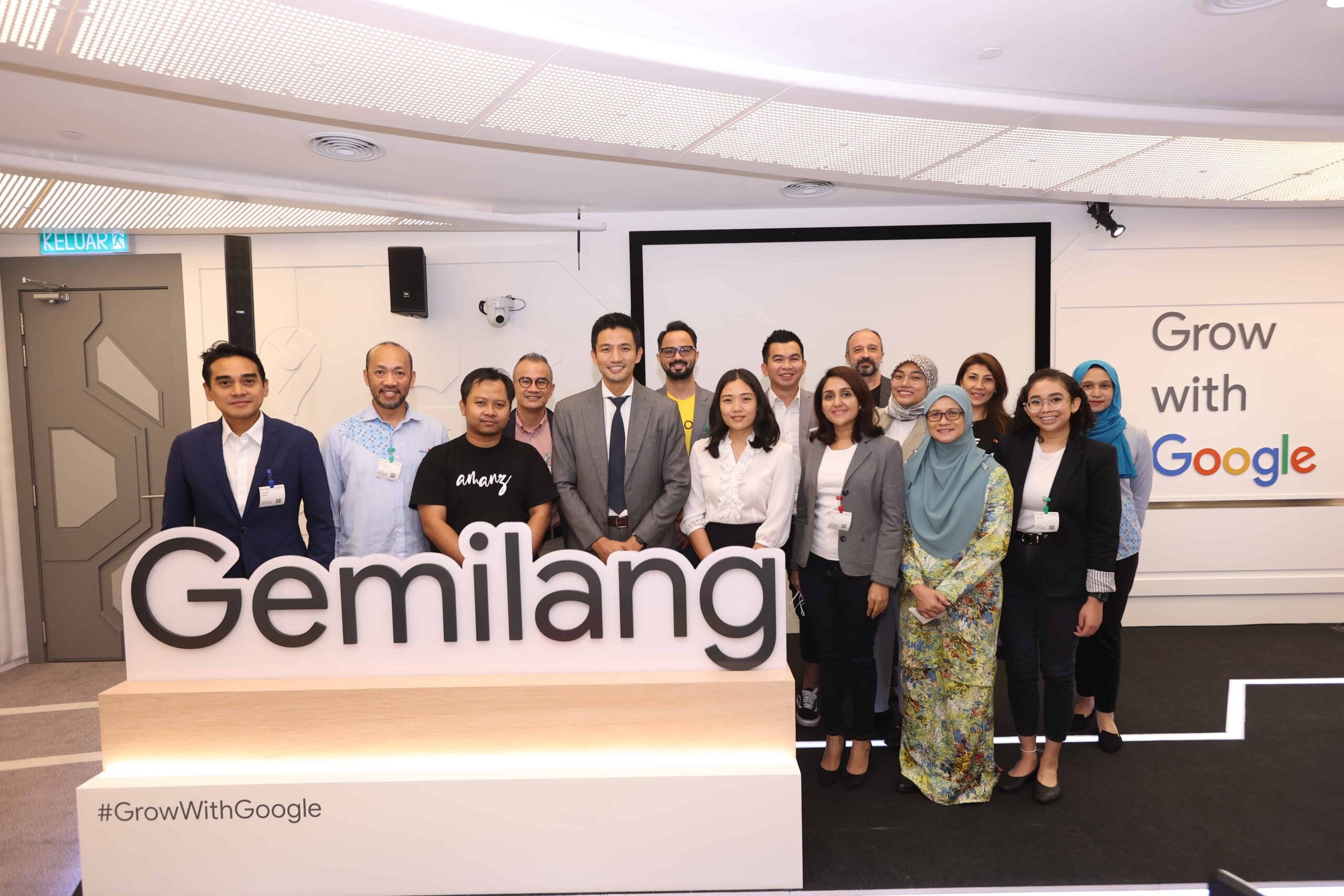
Trainocate Malaysia, based in KL Eco City, is proud to be an HRD Corp Registered Training Provider and a Yayasan Peneraju ALTI, driving workforce development across Malaysia.
Training & Certification Guide
Why train with Trainocate
Speak to a Training Consultant
All courses are HRD Claimable.
Get in touch with our team via the form or WhatsApp us on +6011-5119 6631