
Apply AI to deliver better business insights, improve requirements quality, and support smarter decision-making.
As organizations generate increasing volumes of information and operate in faster decision-making environments, AI enables analysts to uncover insights, improve documentation, streamline analysis, and communicate recommendations more effectively.
- Why get trained: Learn how to use AI for requirements elicitation, stakeholder analysis, data interpretation, process analysis, business reporting, user story creation, prompt engineering, workflow optimization, and AI-assisted decision support.
- Why it matters: AI helps improve analytical accuracy, accelerate documentation, identify patterns, strengthen stakeholder collaboration, and support more informed business decisions while maintaining transparency and human oversight.
- Who should attend: Business Analysts, Senior Business Analysts, Product Analysts, Product Owners, Process and Operations Analysts, PMO Professionals, Strategy Teams, Consultants, Transformation Specialists, Data & Analytics Translators, and managers responsible for business insights.
Develop practical AI skills that strengthen business analysis, improve decision-making, and enhance collaboration across business and technology teams. HRD Corp Claimable.

Overview
Business analysts play a critical role in bridging business needs, data, and technology. As organisations generate increasing volumes of data and face faster decision cycles, Artificial Intelligence (AI) is becoming an essential capability for modern business analysis.
Advances in Machine Learning, Large Language Models (LLMs), and Generative AI enable business analysts to analyse information more efficiently, uncover patterns, generate insights, document requirements, and communicate recommendations with greater clarity and speed. AI tools can support analysts across the entire analysis lifecycle—from problem definition and stakeholder engagement to data analysis, reporting, and strategic decision support.
This course provides a practical, business-focused introduction to AI for business analysts. Participants will learn AI fundamentals, understand how AI technologies interconnect, and gain hands-on experience with leading AI tools such as ChatGPT, Gemini, Copilot, Perplexity, Grok, Claude, Manus, DeepSeek, Qwen, and NotebookLM. The emphasis is on real business analysis use cases, responsible AI usage, and improving the quality and impact of analytical work, without requiring programming skills.

Skills Covered
By the end of this course, participants will be able to:
- Understand core AI concepts and terminology relevant to business analysis
- Distinguish between AI, Machine Learning, Deep Learning, LLMs, and Generative AI
- Evaluate and select AI tools suitable for business analysis workflows
- Apply AI tools to requirements analysis, data interpretation, and reporting
- Use AI responsibly within ethical, legal, and organisational constraints
- Identify high-impact AI use cases that enhance business analysis outcomes
- There are no rerStrengthen their role as a strategic partner in AI-enabled organisations
Prerequisites
There are no prerequisites required to attend this course.
Target Audience
This course is designed for working professionals involved in business analysis and decision support, including:
- Business analysts and senior business analysts
- Product analysts and product owners
- Process and operations analysts
- PMO and strategy teams
- Consultants and transformation specialists
- Data and analytics translators
- Managers and leaders responsible for business insights
No prior AI or technical background is required.
Module 1: Understanding AI for Business Analysis
- What Artificial Intelligence is and is not
- Relationship between:
- Artificial Intelligence
- Machine Learning
- Deep Learning
- Large Language Models
- Generative AI
- How AI systems learn from business and operational data
- Current AI applications supporting business analysts:
- insight generation and pattern detection
- forecasting and scenario analysis
- documentation and requirements support
- decision support and reporting
- Strengths and limitations of AI in business analysis
Module 2: AI Tools Landscape for Business Analysts
- Overview of modern AI tools for analysts:
- ChatGPT, Gemini, Copilot, Claude
- Perplexity, Grok, Manus, DeepSeek, Qwen, NotebookLM
- Differences in:
- reasoning and analytical capabilities
- handling structured vs unstructured data
- accuracy, bias, and reliability
- Selecting the right AI tool for:
- problem framing and hypothesis generation
- stakeholder communication
- documentation and reporting
- Prompt engineering fundamentals for analysis use cases
Hands-On Activities
- Writing prompts for problem definition and analysis
- Generating business questions and hypotheses using AI
- Comparing outputs across AI tools
Module 3: AI for Data Analysis, Insights, and Reporting
- AI-assisted exploratory data analysis
- Identifying trends, drivers, and anomalies
- Supporting KPI analysis and performance reviews
- AI-assisted business storytelling and reporting
- Using AI with spreadsheets:
- Excel with Copilot
- Google Sheets with Gemini
Hands-On Activities
- Generating insights from sample business datasets
- Drafting executive-ready insight summaries
Module 4: Responsible AI, Ethics, and Governance for Analysts
- Risks of AI in business analysis:
- hallucinations and incorrect insights
- biased assumptions and conclusions
- over-reliance on AI-generated outputs
- Data quality and validation considerations
- Transparency and explainability in analysis
- Human-in-the-loop analytical decision-making
- Best practices for responsible AI usage by analysts
Module 5: AI for Requirements Analysis and Stakeholder Engagement
- AI-assisted requirements elicitation and documentation
- Supporting stakeholder interviews and workshops
- Analysing stakeholder needs and priorities using AI
- Generating user stories, use cases, and process flows
Hands-On Activities
- Drafting requirements and user stories using AI
- Improving stakeholder communication with AI support
Module 6: AI for Process Analysis and Optimisation
- Analysing end-to-end business processes using AI
- Identifying inefficiencies and improvement opportunities
- Supporting process redesign and change initiatives
- Documenting process insights clearly for decision-makers
Hands-On Activities
- Analysing a sample business process using AI
- Generating process improvement recommendations
Module 7: AI-Enabled Workflow Automation for Business Analysis
- Designing AI-supported analysis workflows:
- problem → data → insight → recommendation
- Integrating AI tools into daily analyst activities
- Improving speed, consistency, and quality of analysis
- Measuring the impact of AI on analytical productivity
Exercise
- Designing an AI-supported business analysis workflow
Module 8: AI Strategy for Business Analysts and Leaders
- Identifying high-impact AI opportunities for business analysis teams
- Positioning analysts as AI translators and change agents
- Developing an AI adoption roadmap for analysis functions
- Establishing AI usage guidelines and governance
- Preparing business analysts for AI-enabled roles
Workshop
- Drafting a high-level AI strategy for a business analysis team

Exam & Certification
Note: There is no exam directly associated with this course. However, Trainocate offers an extensive portfolio of industry-recognized certifications that can help you stand out as a tech professional in 2026 and beyond. Achieving these credentials are one of the most effective ways to validate your skills and accelerate your career.
With our expert-led training, you’ll be prepared to:
- Master in-demand capabilities across Cloud, Data & AI, and Cybersecurity — areas driving global digital transformation.
- Prove your expertise with a globally respected credential recognized by employers worldwide.
- Advance your career by enhancing your credibility, increasing your earning potential, and opening doors to new opportunities.
Explore our full range of certs and start building the skills that matter today:
- Top Cybersecurity Skills for 2026
- Top Data and AI certifications for 2026
- Top Cloud Certifications for 2026
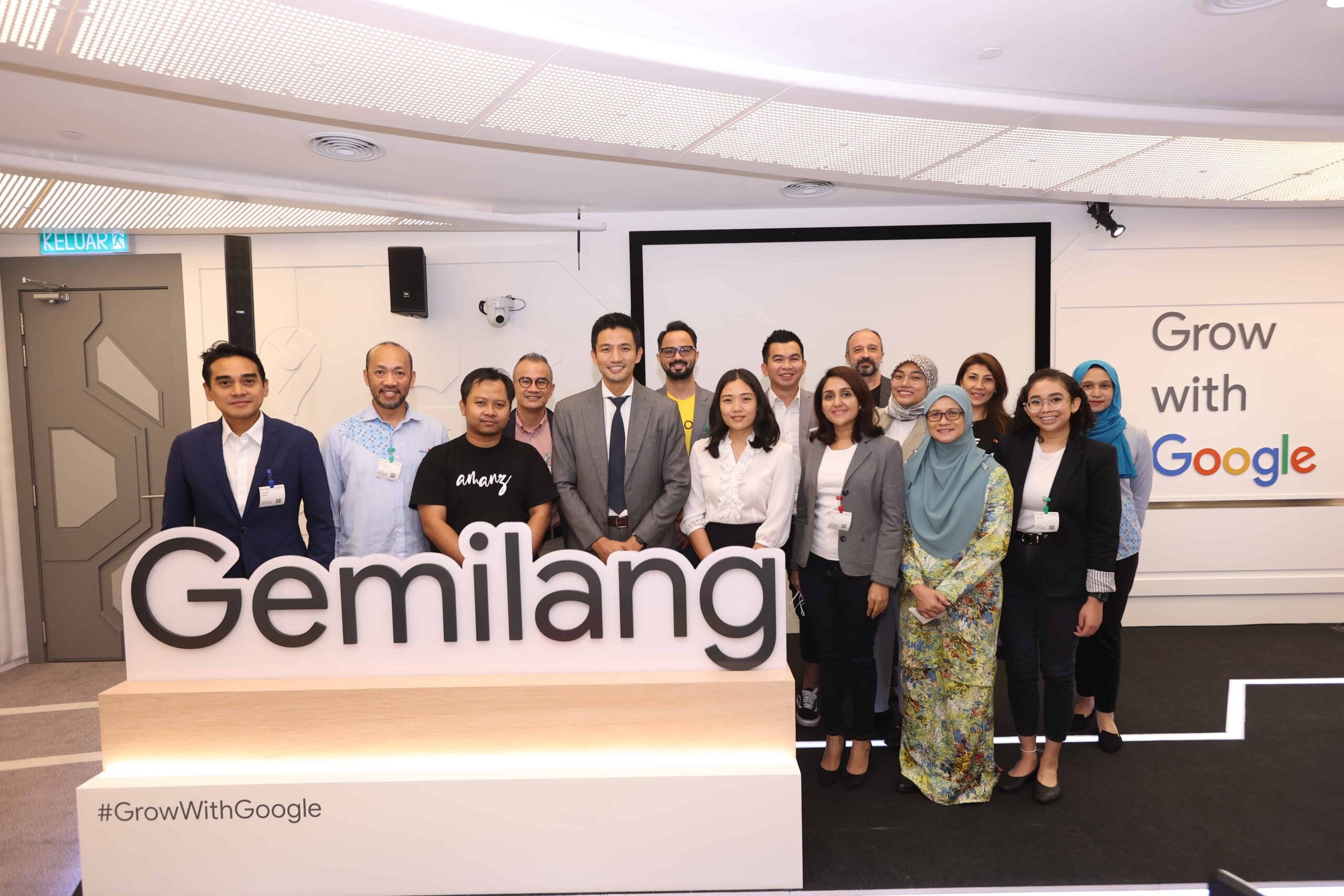
Trainocate Malaysia, based in KL Eco City, is proud to be an HRD Corp Registered Training Provider and a Yayasan Peneraju ALTI, driving workforce development across Malaysia.
Training & Certification Guide
Why train with Trainocate
Speak to a Training Consultant
All courses are HRD Claimable.
Get in touch with our team via the form or WhatsApp us on +6011-5119 6631