The global labor market has reached a definitive tipping point. In April 2026, “AI proficiency” is no longer a niche skill; it is the foundational requirement for professional survival. As Microsoft executes its most aggressive certification overhaul in a decade, Trainocate Malaysia, an award-winning Microsoft Training Services Partner, is leading the transition.

This guide provides a comprehensive analysis of the nine new AI-native certifications, the retirement of legacy tracks, and the unique funding opportunities available for Malaysian enterprises and professionals.

The Global Macro-Shift: Why Certify in 2026?

The urgency to certify is driven by a stark reality: the “AI Divide” has arrived. To build a resilient career, professionals must understand the macro-economic forces currently reshaping the industry.

The Authority of Data

According to the Microsoft Work Trend Index 2024, 66% of business leaders now state they would not hire a candidate who lacks AI proficiency.

This sentiment is echoed by the World Economic Forum’s 2025 Future of Jobs Report, which indicates that while AI is set to displace 92 million traditional roles, it is simultaneously creating 170 million new positions – a net gain of 78 million for those with validated, high-tier technical skills.

Furthermore, McKinsey’s AI Trust Maturity Survey report identifies “knowledge and training gaps” as the single largest barrier to organizational AI adoption.

Despite this, the EY Work Reimaged study revealed a significant “AI Disconnect”: 88% of companies have integrated AI into their tech stack, yet only 28% of their employees feel empowered or trained to use it effectively.

Trainocate Malaysia serves as the strategic bridge across this disconnect, transforming raw AI potential into validated organizational capability.

Malaysia’s AI Imperative: National Vision & Funding

For Malaysian professionals, the certification journey is backed by unprecedented government support. Under the Belanjawan MADANI 2026, the government has reinforced its commitment to the “AI Nation 2030” vision.

Regional Growth & Support

Digital investments secured in 2025 has led to job creation of over 12,600 roles in AI-related fields. The national goal is to produce 30,000 AI professionals by 2030; we currently stand at a critical supply-demand gap.

The 2026 budget provides a 50% tax deduction for SMEs on AI and Cybersecurity training.

As a registered training provider, Trainocate Malaysia’s Microsoft programs are HRD Corp claimable. This allows Malaysian businesses to leverage their levies to upskill their workforce in high-end domains such as AI, Cloud and Cybersecurity without direct capital expenditure.

Technical Deep-Dive: The 9 New Microsoft Certifications

Microsoft is moving beyond “Cloud-First” to “Agent-First” architectures. Below are the nine new certifications launching in early 2026, designed for the next generation of IT professionals.

Data & AI Infrastructure
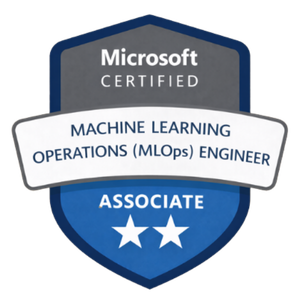
Demonstrate skills setting up infrastructure for machine learning operations (MLOps) and generative AI operations (GenAIOps) solutions on Azure, together referred to as AI operations (AIOps).

As a candidate for this Microsoft Certified: Machine Learning Operations (MLOps) Engineer Associate, you should have subject matter expertise in setting up infrastructure for machine learning operations (MLOps) and generative AI operations (GenAIOps) solutions on Azure, together referred to as AI operations (AIOps). 

The Why: Moving from an AI prototype to an industrial-scale solution is the biggest challenge of 2026. This exam validates the ability to operationalize and govern generative AI solutions in production.

Technical Pillar: Focuses on LLMOps (Large Language Model Operations), model monitoring, vector database maintenance, and automated CI/CD deployment pipelines for AI.

Local Use Case: A senior DevOps engineer at a Kuala Lumpur-based logistics firm automating the retraining of route-optimization models using real-time traffic and weather data.

Demonstrate expertise in integrating and modeling data, building and deploying optimized pipelines, and troubleshooting and maintaining workloads in Azure Databricks.

Demonstrate expertise in integrating and modeling data, building and deploying optimized pipelines, and troubleshooting and maintaining workloads in Azure Databricks.

As a candidate for this Microsoft Certified: Azure Databricks Data Engineer Associate, you should have subject matter expertise in integrating and modeling data, building and deploying optimized pipelines, and troubleshooting and maintaining workloads in Azure Databricks. 

The Why: High-performance AI requires high-performance data. This certification is intended for data professionals who need to build “AI-ready” foundations using the industry-standard Databricks platform.

Technical Pillar: Core focuses include Spark Structured Streaming, Delta Lake management, and implementing the “Medallion Architecture” (Bronze, Silver, Gold data layers).

Local Use Case: A data architect in a Penang-based semiconductor facility building real-time telemetry pipelines to predict hardware failures on the assembly line.

AI is transforming how data-driven applications are built, and SQL professionals are at the center of this new era. Whether you’re a database developer, administrator, analyst, or architect, your SQL expertise is more critical than ever.

The Microsoft Certified: SQL AI Developer Associate certification to help you validate your ability to integrate AI capabilities directly into SQL-based solutions without needing to move your data, learn entirely new platforms, or move away from the T-SQL skills you already use every day.  

The Why: Modern databases are no longer just storage bins; they are intelligent engines. This track validates the ability to integrate AI directly into database solutions via natural language.

Technical Pillar: Mastering Vector Search within Azure SQL, natural language-to-SQL integration, and implementing database-level AI governance and DevOps.

Local Use Case: A backend developer for a Malaysian retail chain building a “natural language query” interface that allows store managers to ask, “Which products are low in stock?” without writing SQL.

AI Application & Agentic Architecture
The Microsoft Certified: Azure AI Fundamentals certification explores how you can build modern AI apps and agents by using Microsoft Foundry. It’s ideal for beginners who want to build AI applications on Microsoft platforms.

The Why: The entry point for AI has fundamentally changed. This new version focuses on the foundational concepts of building modern AI apps and agents within the Microsoft Foundry ecosystem.

Technical Pillar: Covers Microsoft Foundry basics, AI agent design principles, and the ethics of generative and agentic architectures.

Local Use Case: A digital marketing specialist in Petaling Jaya learning how to design an AI agent that can autonomously draft and schedule personalized social media content.

The Microsoft Certified: Azure AI Apps and Agents Developer Associate certification aligns with today’s generative and agentic architectures for planning and managing AI resources in Microsoft Foundry, building generative apps and multistep reasoning workflows, and developing production‑ready agents with multi‑agent orchestration capabilities.

The Why: We are shifting from simple chatbots to “Agents” that can reason and execute tasks. This is the mandatory replacement for AI-102 for those building production-ready autonomous workflows.

Technical Pillar: Multi-agent orchestration (using tools like Semantic Kernel or AutoGen), multi-step reasoning workflows, and planning for generative architectures.

Local Use Case: A software house in Cyberjaya building a complex multi-agent system where a “Legal Bot” and a “Finance Bot” coordinate to review and approve corporate contracts.

The Microsoft Certified: Azure AI Cloud Developer Associate certification is designed for developers who want to validate their ability to build, integrate, and monitor AI solutions on Azure by using containerized compute, vector-enabled databases, event-driven AI pipelines, serverless functions, secret management, and distributed observability.

The Why: Traditional developers must now be “AI-native.” This replaces the general AZ-204 track to focus on developers who build, integrate, and monitor AI solutions on Azure.

Technical Pillar: Focuses on event-driven AI pipelines, containerized compute (AKS), serverless functions, and distributed observability for AI workloads.

Local Use Case: An app developer for a Malaysian e-wallet service building an AI-powered fraud detection system that triggers instantly when a transaction event occurs.

Security & Hybrid Infrastructure

The Microsoft Certified: Cybersecurity Business Professional certification validates your ability to recognize security risks, apply secure practices, and make informed business decisions that reduce organizational exposure while enabling productivity and AI adoption.

The Why: Leaders are the first line of defense. This certification enables non-technical business professionals to recognize security risks and make informed decisions that enable safe AI adoption.

Technical Pillar: AI risk recognition, business decision-making for organizational exposure, and productivity enablement within a secure AI framework.

Local Use Case: A C-suite executive in a Malaysian Public Listed Company (PLC) evaluating the security posture and insurance implications of adopting a company-wide Generative AI platform.

The Microsoft Certified: Cloud and AI Security Engineer Associate certification expands the security role to include cloud and AI model protection. Prove that you can design and implement secure environments for building and running AI solutions by using current security patterns and controls in enterprise deployments.

The Why: Traditional security (AZ-500) didn’t account for “Prompt Injection” or “Model Poisoning.” This track expands the security role to include specific protections for AI models and data privacy.

Technical Pillar: AI model protection, secure prompt engineering, identity management for AI agents, and implementing current security patterns for enterprise AI.

Local Use Case: A security engineer at a Malaysian government agency ensuring that internal generative AI models do not leak sensitive PII (Personally Identifiable Information) during citizen interactions.

The Microsoft Certified: Windows Server Hybrid Administrator Certification combines previous hybrid infrastructure tracks to validate skills across Azure and on-premises environments.

The Microsoft Certified: Windows Server Hybrid Administrator certification combines previous hybrid infrastructure tracks to validate skills across Azure and on-premises environments.

The Why: Hybrid cloud is the reality for most Malaysian enterprises. This new exam combines previous hybrid tracks into a single, high-efficiency credential for managing Azure and on-premises environments.

Technical Pillar: Azure Arc integration, hybrid cloud identity management, and automated server migration from on-premises to the Microsoft Cloud.

Local Use Case: An IT manager for a plantation company in East Malaysia managing hybrid servers across multiple remote sites using a unified Azure control plane.

The Retirement Roadmap: When to Pivot

If you hold the following certifications, note their retirement dates. After these dates, you cannot renew the old track; you must transition to the new AI-native equivalent.

Retiring Microsoft Certification Certification retirement date Training retirement date Replacement Certification
Azure Data Scientist Associate
(Exam DP-100)
June 1, 2026  April 2026 Machine Learning Operations (MLOps) Engineer Associate
(Exam AI-300)
Azure AI Fundamentals
(Exam AI-900)
June 30, 2026  April 2026 Azure AI Fundamentals
(Exam AI-901)
Azure AI Engineer Associate
(Exam AI-102)
June 30, 2026 April 2026 Azure AI App and Agent Developer Associate
(Exam AI-103)
Azure Developer Associate
(Exam AZ-204)
July 31, 2026  May 2026 Azure AI Cloud Developer Associate
(Exam AI-200)
Azure Security Engineer Associate
(Exam AZ-500)
August 31, 2026 August 2026 Cloud and AI Security Engineer Associate
(Exam SC-500)
Windows Server Hybrid Administrator
(Exam AZ-800 and Exam AZ-801)
September 2026 September 2026 Windows Server Hybrid Administrator
(Exam AZ-802)

Comprehensive 2026 AI Certification FAQ

If you are already 80% through your preparation, complete it. However, if you are starting now, we strongly recommend waiting for the SC-500 (Cloud and AI Security Engineer) launching in beta in May 2026. The SC-500 specifically includes AI model protection, which is the most sought-after security skill in the 2026 job market.

While AI-102 focused on integrating pre-built Cognitive Services, AI-103 (Azure AI App and Agent Developer) shifts the focus to “Agentic AI.” This includes multi-agent orchestration, complex reasoning workflows, and managing AI resources within the new Microsoft Foundry ecosystem.

Yes. Under the Belanjawan MADANI 2026 framework, SMEs are entitled to a 50% tax deduction for AI and Cybersecurity upskilling. When combined with HRD Corp levy claims, the net cost for high-level Microsoft certification training at Trainocate Malaysia is significantly reduced.

Agentic AI refers to systems that can autonomously plan and execute multi-step tasks to reach a goal. Microsoft has integrated this into exams like AI-103 and AI-901 because the industry has moved from “assistants” (responding to prompts) to “agents” (executing workflows).

They are complementary. Applied Skills verify proficiency in a specific task (e.g., “Configure Azure OpenAI Service”), while Role-Based Certifications (like AI-300) prove you can handle an entire job role. Trainocate recommends starting with an Applied Skill to gain immediate “hands-on” proof while working toward a full certification.

No. It will remain valid on your transcript until its expiration. However, you will not be able to renew it. You should aim to earn the AI-200 before your AZ-204 expires to show employers you have mastered the transition to AI-integrated development.

In 2025, many companies struggled with “AI Sprawl.” In 2026, the focus is on governance and cost-optimization. The AI-300 proves you can manage the lifecycle of an AI model, ensuring it remains accurate, secure, and cost-effective in a production environment.

Beta exams (AI-300, DP-750, etc.) are available through the Microsoft Skills Hub. Trainocate Malaysia provides specific “Beta Prep” cohorts that use the latest official Microsoft courseware to ensure you are ready for the unique challenges of unreleased exam versions.

Yes, the Microsoft Certified: AI Transformation Leader (AB-731) is designed for business leaders who guide AI transformation and innovation with Microsoft 365 Copilot, Azure AI, and Microsoft Foundry, without requiring coding skills.

As an award-winning Microsoft Training Services Partner, we offer instructor-led training with industry veterans. Our labs are updated in real-time to reflect the 2026 exam changes, and we provide local support for HRD Corp and government funding applications.

Conclusion: Seize the First-Mover Advantage

The IT industry in 2026 does not reward those who wait. The retirement of legacy certifications marks the end of the “Generalist” era and the beginning of the “AI Specialist” era. By pursuing the new Microsoft AI-native certifications, you are positioning yourself as a high-value architect of the future.

→ Secure your place in the 2026 AI Economy.